
March 19, 2026
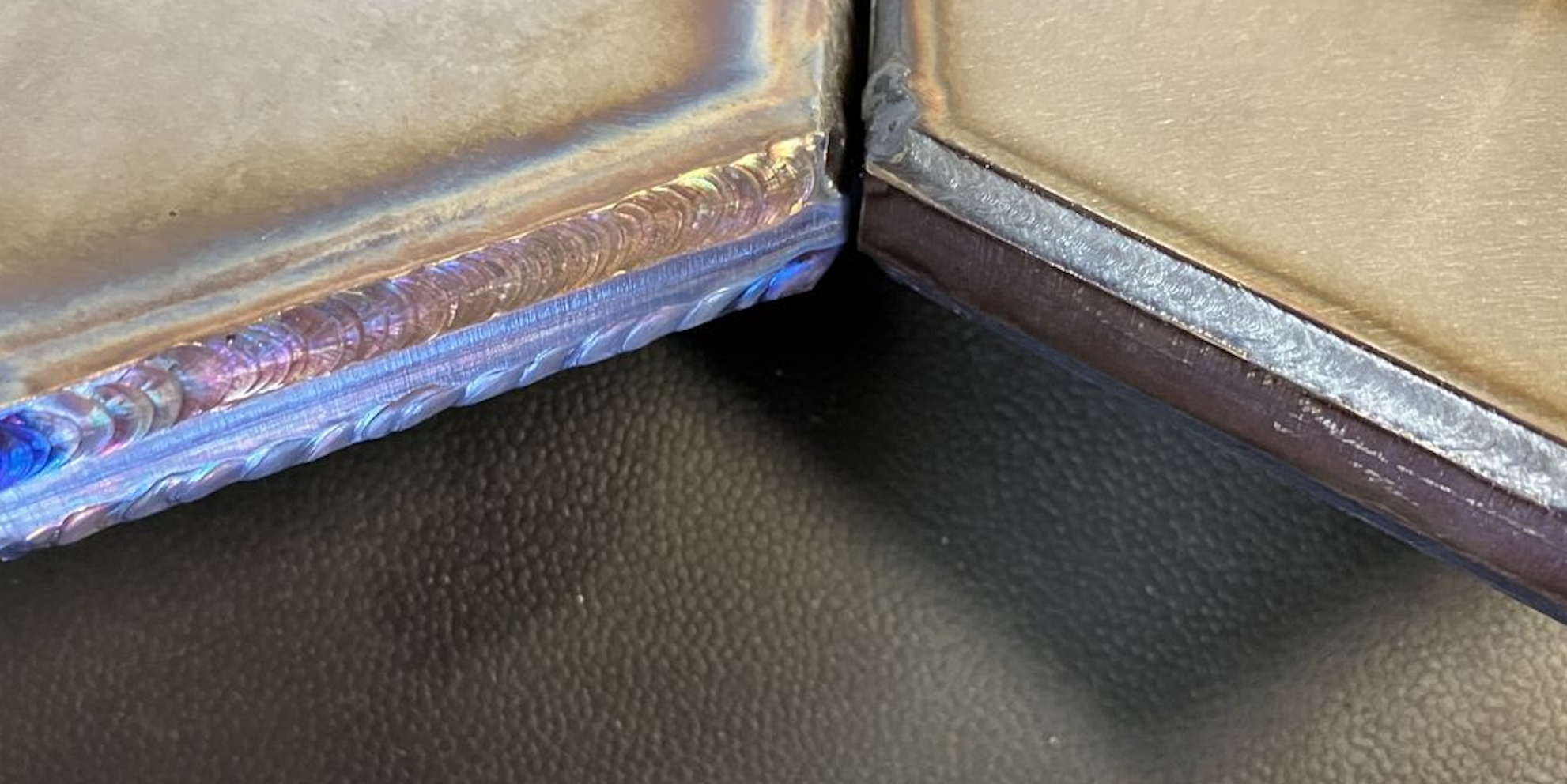
TIG weld on the left, Laser weld on the right
Is Laser Welding Positioned to Replace TIG in Precision Applications?
After recently running my first beads with a handheld laser welder, I wanted to evaluate it through the lens of a TIG and stick welding background. The conclusion is clear: Laser welding will play a significant role in the future of fabrication. However, in precision welding applications, it is better understood as a complementary process, not a replacement for TIG.
Key Observations
Heat Input Laser welding introduces significantly lower heat input compared to TIG, reducing the size of the heat-affected zone and expanding possibilities for thin or heat-sensitive materials.
Distortion While reduced heat input can minimize distortion, it does not eliminate it. Solidification shrinkage and residual stresses remain governing factors.
Travel Speed Laser welding enables substantially higher travel speeds, offering clear advantages in production environments.
Process Forgiveness This is a critical distinction. Laser welding is far less forgiving than TIG. Minor deviations in fit-up, travel, or alignment are immediately reflected in the weld.
Shielding Considerations Gas coverage appeared less robust in my initial use, which may present challenges when working with reactive alloys.
Operator Skill Transfer Although the physical technique differs, foundational knowledge—heat control, metallurgy, and weld behavior—remains highly relevant.
Insights from Industry Discussion
Feedback from other welders reinforced several patterns:
Fit-up and preparation become more critical with laser processes
TIG remains advantageous in less controlled or variable conditions
Skill requirements shift rather than diminish
Final Perspective
Laser welding represents a meaningful advancement in capability, particularly in controlled, high-efficiency environments. However, TIG welding continues to offer unmatched adaptability and control in precision work. The future of welding is not defined by one process replacing another, but by the strategic integration of both.