
March 23, 2026
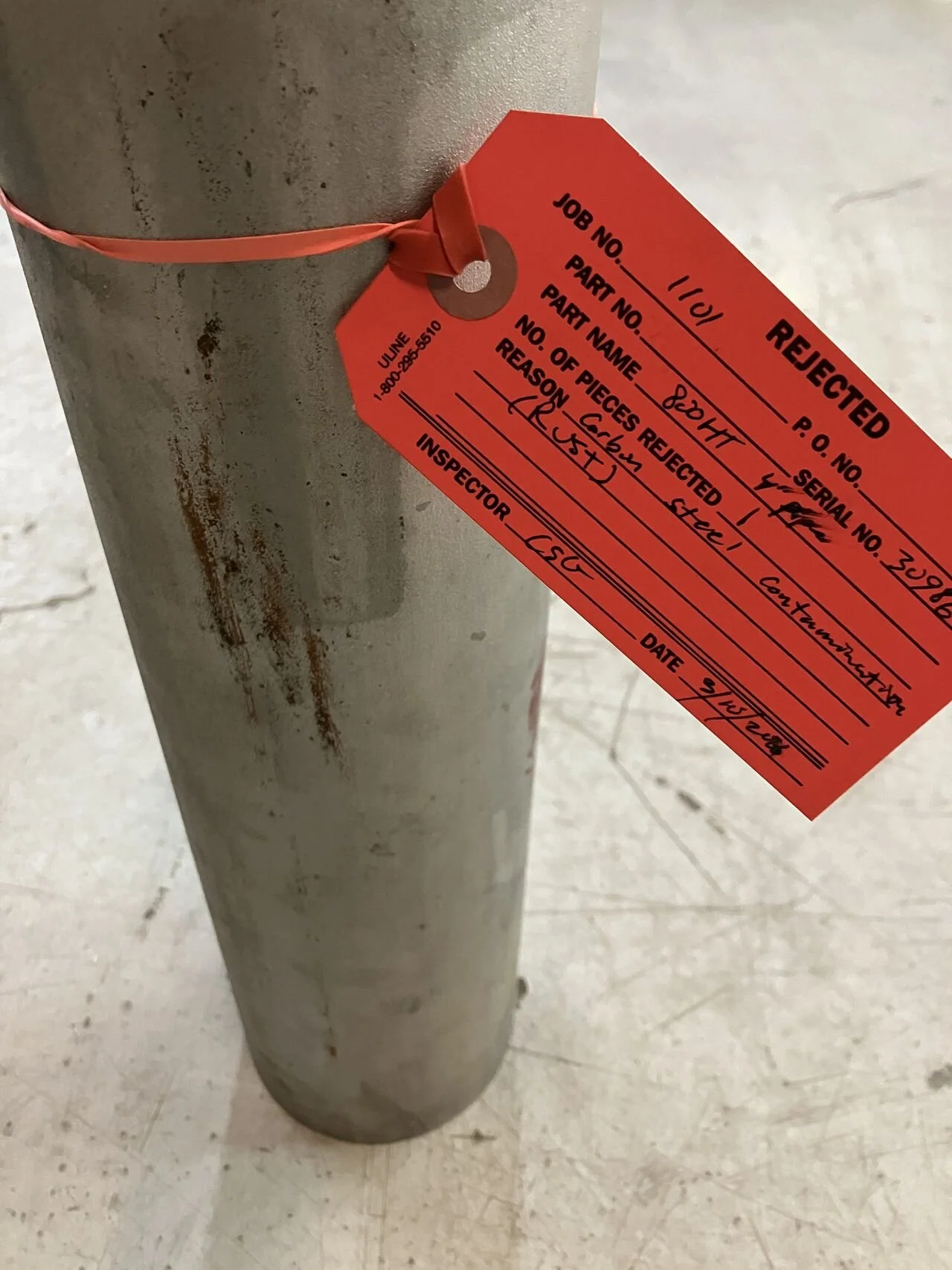
Rejected 800HT due to Rust/Contamination
Corrosion Can Start Before Service
When corrosion shows up in service, we tend to look at operating conditions first. Temperature, environment, process chemistry.
But in many cases, the real problem started much earlier — in the fabrication shop.
I was recently reminded of this seeing 800HT rejected due to surface rust. A high-performance alloy, compromised before it ever saw service conditions.
Here are some of the most common contamination sources I see during fabrication:
1. Carbon Steel Tooling & Fixtures
Contact with carbon steel vises, lathe chucks, or work surfaces can embed iron particles into the alloy surface — creating initiation sites for rust.
Solution: Use non-ferrous or protected tooling and fixtures.
2. Poor Welding Control
Excessive heat input or inadequate shielding gas can damage the passive layer through alloy depletion and oxidation.
Solution:
Follow qualified WPS
Ensure welder training
Measure purge quality and heat input
Perform post-weld NDE
3. Grinding Dust
Grinding sparks and dust travel farther than most expect — and can contaminate nearby materials.
Solution:
Separate grinding areas
Install spark containment
Use ventilation that prevents cross-contamination
4. Abrasive Cross-Contamination
Grinding discs, Scotch-Brite pads, and files used on carbon steel (or even aluminum) can transfer embedded particles.
Solution:
Use dedicated consumables per alloy
Store separately
Clearly label everything
5. Improper Storage & Handling
Steel racks, forklift forks, and even damaged pallets can introduce contamination.
Solution:
Isolate materials from carbon steel
Use protective barriers (plastic, non-ferrous liners, durable fabrics)
6. Chemical Contamination
Sulfur-bearing cutting fluids, high-chloride water, and even certain markers can initiate corrosion.
Solution:
Use approved cutting fluids
Use DI or low-chloride water
Verify marking tools are compatible
None of these issues seem catastrophic on their own.
But together? They can quietly undermine the corrosion resistance the alloy was selected for in the first place.
And by the time it shows up in service, the root cause is long gone.
Fabrication quality is corrosion performance.